
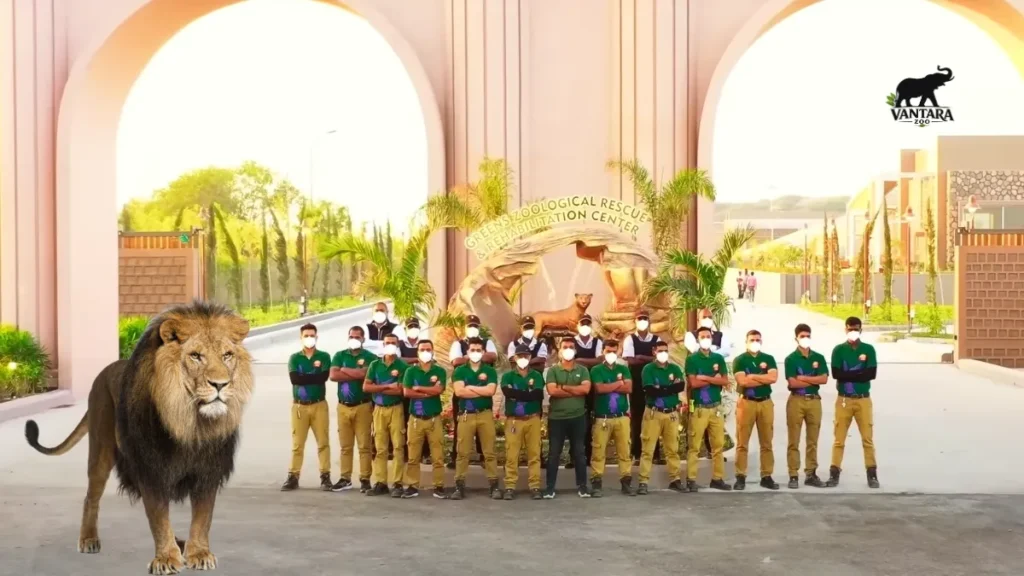
Expert Wildlife Team Deploys Advanced Medical Resources to Protect Lions and Cubs Amid Babesiosis Outbreak
A large-scale wildlife rescue and treatment operation is underway in Gujarat’s Gir landscape after a dangerous parasitic disease began affecting Asiatic lions and lion cubs in the region. As concerns grew over the health of the endangered big cats, the expert team from Vantara, the animal rescue and rehabilitation initiative based in Jamnagar, stepped in to support the state forest department in what has become one of the most significant wildlife health interventions seen in recent years.
The emergency response comes after reports of several suspected lion and cub deaths in parts of the Gir ecosystem, raising alarms among wildlife officials, veterinarians, and conservationists. With Gir being the world’s only natural habitat of the Asiatic lion, the outbreak has drawn serious attention from authorities determined to prevent further losses.
Disease Outbreak Raises Alarm in Gir
The recent health crisis emerged in several areas along the Gir East and Gir West forest divisions, including regions near Gir Gadhada, Jasadhar, Babariya, and the Babra Kot range in Amreli district. Wildlife monitoring teams began noticing symptoms among lions and cubs that pointed to a potentially dangerous infectious condition.
Initial investigations identified the disease as babesiosis, a parasitic infection transmitted through tick bites. While not caused by a virus, the disease can have severe consequences for wild animals, especially young cubs and individuals with weakened immunity.
The outbreak triggered immediate concern because of the vulnerability of the Asiatic lion population. Although conservation efforts over the past decades have helped increase lion numbers in Gujarat, the concentration of the entire wild population within a limited geographical region means that disease outbreaks can pose a serious conservation challenge.
Recognizing the urgency of the situation, Vantara mobilized a specialized team of wildlife veterinarians, surgeons, pathologists, laboratory experts, and animal care professionals to assist forest officials on the ground.
Understanding Babesiosis and Its Impact on Lions
Babesiosis is caused by microscopic parasites that enter an animal’s bloodstream through infected ticks. Once inside the body, these parasites attack red blood cells, leading to anemia and a range of potentially life-threatening complications.
Veterinary experts explain that affected animals may experience high fever, weakness, lethargy, jaundice, and breathing difficulties. In severe cases, the destruction of red blood cells can become so extensive that the animal’s body struggles to transport oxygen effectively.
Young lion cubs are considered especially vulnerable because their immune systems are still developing. Without timely diagnosis and treatment, the disease can progress rapidly and become fatal.
The seasonal conditions during the transition between summer and monsoon often create favorable environments for tick populations, increasing the risk of transmission among wildlife. As a result, health surveillance becomes particularly important during this period.
Vantara Establishes Advanced Wildlife Medical Operations
To strengthen emergency response efforts, Vantara transformed the animal care facility at Jasadhar into a high-functioning medical coordination center.
The rescue organization deployed advanced wildlife healthcare equipment, including a mobile intensive care unit designed specifically for wild animals. Field teams also introduced portable diagnostic laboratory facilities capable of conducting rapid blood analysis near affected locations.
This technology has significantly improved response times. Traditionally, blood samples collected from wildlife often require transportation to specialized laboratories, delaying diagnosis and treatment decisions. The mobile diagnostic capabilities now allow veterinary teams to analyze samples within a short period and begin treatment much sooner.
Wildlife specialists involved in the operation describe rapid diagnosis as one of the most critical factors in improving survival chances for infected lions.
The use of field-based laboratory testing has also enabled teams to monitor disease progression closely and adjust treatment plans according to each animal’s condition.
Intensive Treatment and Blood Transfusion Support
One of the major challenges associated with babesiosis is the severe reduction in red blood cells. Because the disease directly attacks the blood system, some infected lions require intensive medical intervention.
Veterinary teams have reportedly implemented advanced treatment protocols that include blood transfusions for critically affected animals. Such procedures are complex in wildlife medicine and require careful monitoring by trained specialists.
Alongside blood support therapy, veterinarians are providing intravenous fluids, nutritional supplements, vitamins, and targeted medications aimed at stabilizing affected animals and helping them recover.
Critical care teams are continuously monitoring vital signs and clinical indicators to ensure that treatment remains effective throughout the recovery period.
Wildlife health experts note that applying these advanced medical techniques in a field conservation setting represents a major step forward in India’s capacity to respond to wildlife disease emergencies.
Seventeen Lions and Cubs Under Close Observation
As part of containment efforts, rescue teams have identified and relocated lions showing symptoms or suspected signs of infection. After careful rescue operations, 17 lions and lion cubs have been moved to designated animal care facilities.
These animals are currently being housed in controlled isolation areas where veterinary teams can monitor them without the risk of further spreading the disease among wild populations.
Experts from Vantara and the forest department are maintaining round-the-clock observation of the isolated animals. Their feeding behavior, movement patterns, body temperature, blood parameters, and overall health status are being assessed regularly.
Continuous monitoring allows veterinarians to respond immediately if any animal shows signs of deterioration.
According to officials involved in the operation, the condition of the isolated lions has shown encouraging signs of improvement following treatment, providing hope that the intervention is producing positive results.
Large-Scale Disease Containment Strategy
The rescue effort extends far beyond treating infected animals. Authorities are also focused on preventing the disease from spreading to other lion populations across the Gir landscape.
To achieve this, wildlife managers have implemented a comprehensive surveillance and containment strategy. Areas where infections have been detected are being closely monitored, and surrounding regions have been placed under heightened observation.
Forest trackers and wildlife monitoring teams are keeping a close watch on lion prides within a roughly 10-kilometer buffer zone around affected areas. Camera traps, field patrols, and tracking systems are being used to detect any new cases at the earliest possible stage.
The goal is to identify symptoms quickly and intervene before the disease can spread further among wild animals.
This proactive approach reflects lessons learned from previous wildlife disease management programs around the world, where early detection has often proven crucial in limiting outbreaks.
Tick-Control Campaign Expanded Across Lion Habitat
Because ticks are the primary carriers of babesiosis, controlling their population has become a key component of the response strategy.
Under veterinary guidance, authorities have launched an extensive de-ticking operation covering lion habitats and nearby areas. The initiative aims to reduce the number of disease-carrying ticks in the environment while minimizing impacts on other wildlife species.
Specialized treatments are being used in locations frequented by lions, including resting areas and vegetation zones where ticks are commonly found. Wildlife-safe methods are being prioritized to ensure that the broader ecosystem remains protected.
Officials estimate that more than 350 lions roaming within forest and surrounding revenue areas may benefit from these preventive measures.
The tick-control program is expected to continue alongside ongoing disease surveillance efforts in the coming weeks.
State Government Reviews Situation
The developing situation has also prompted action at the highest levels of the Gujarat government.
Senior officials reviewed the outbreak during a high-level meeting led by Chief Minister Bhupendra Patel and Forest Minister Arjun Modhwadia. The meeting focused on disease monitoring, treatment progress, scientific investigation, and long-term preventive measures.
As part of the scientific response, biological samples collected from affected lions have been sent to the Gujarat Biotechnology Research Centre (GBRC) for detailed analysis. Researchers are expected to examine the samples to better understand the outbreak and support future disease-management strategies.
The involvement of research institutions highlights the growing role of science-based conservation in protecting endangered wildlife populations.
Also read: Anant Ambani Offers Lifeline to Colombian Hippos, Proposes Relocation to Vantara in India
Collaboration Driving Recovery Efforts
The response to the outbreak has brought together multiple organizations with expertise in wildlife conservation and animal health.
The Gujarat Forest Department has provided field coordination and monitoring support, while Vantara has contributed specialized veterinary expertise and advanced medical infrastructure. Veterinary professionals from Junagadh Veterinary College have also joined the effort, creating a multidisciplinary team focused on saving affected animals.
Conservation experts say that such collaboration is essential when dealing with wildlife health emergencies, particularly those involving species of high ecological and global conservation importance.
Early indications suggest that the coordinated approach is yielding positive results. Officials report that all 17 lions and cubs currently under isolation are showing signs of recovery, offering cautious optimism that the outbreak can be brought under control.
Protecting the Future of the Asiatic Lion
The current crisis serves as a reminder of the challenges that wildlife populations face even after successful conservation efforts. While the Asiatic lion has made a remarkable recovery from the brink of extinction, disease outbreaks remain a significant threat because the entire wild population exists within a relatively concentrated region.
Experts emphasize that continued health surveillance, habitat management, veterinary preparedness, and scientific research will be critical for safeguarding the species in the future.
For now, the focus remains on treating affected animals, preventing further infections, and ensuring that Gir’s iconic lions continue to thrive. As veterinary teams, forest officials, and conservation specialists work around the clock, the ongoing operation stands as one of the largest coordinated wildlife disease-response efforts undertaken in the region.
The outcome of this intervention may not only determine the fate of the currently affected lions but could also shape future wildlife healthcare strategies across India.