
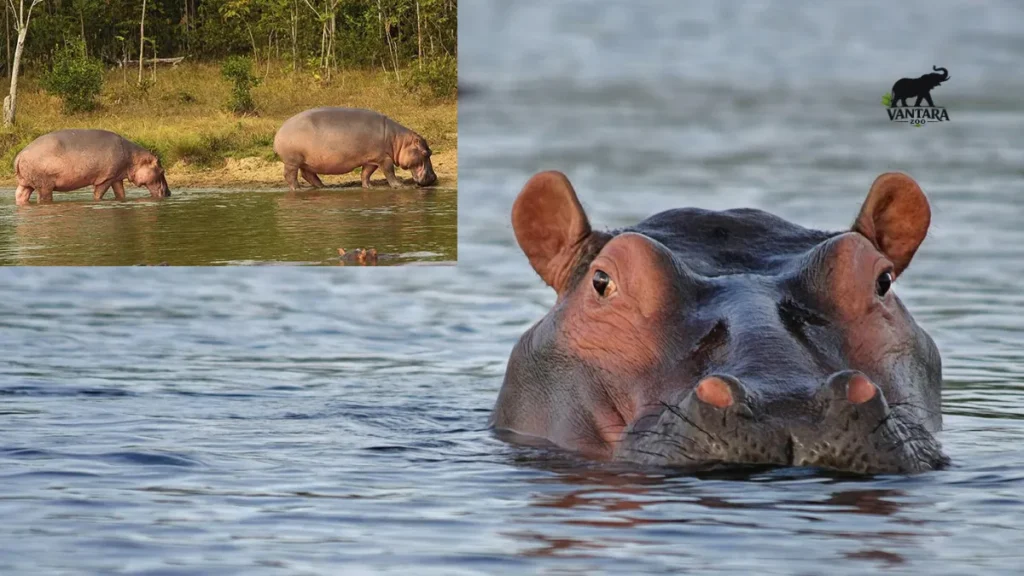
Vantara: In a significant conservation intervention that has drawn global attention, Anant Ambani has stepped forward with a humane alternative to Colombia’s controversial plan to cull dozens of wild hippopotamuses. The young conservation advocate has urged the Colombian government to halt its decision to kill 80 hippos and instead consider relocating them to India under the care of his ambitious wildlife initiative, Vantara.
A Humane Alternative to Culling
The proposal comes at a time when authorities in Colombia have approved lethal measures to control the growing population of hippopotamuses in the Magdalena River. These animals, which trace their origins to a small group brought into the country in the 1980s, have multiplied rapidly over the decades. With no natural predators and a favorable ecosystem, their numbers have surged to around 200, raising serious ecological and safety concerns.
Against this backdrop, Anant Ambani has formally appealed to Irene Vélez Torres, Colombia’s Minister of Environment and Sustainable Development, requesting a pause on the planned culling. His appeal emphasizes the need to explore scientifically managed and compassionate solutions rather than resorting to lethal control.
The Vantara Proposal: Science Meets Compassion
At the heart of Ambani’s appeal is a detailed relocation plan through vantara, his large-scale animal rescue and rehabilitation project based in Jamnagar, Gujarat. The initiative has offered to take full responsibility for the safe translocation of all 80 hippos, ensuring the process adheres to international conservation and animal welfare standards.
The plan includes:
- Expert veterinary supervision at every stage
- Safe and humane capture techniques
- Carefully managed international transport
- Strict biosecurity protocols
- Creation of a naturalistic habitat in India
According to the proposal, vantara is prepared to recreate environmental conditions similar to those found in Colombia, allowing the animals to adapt comfortably to their new surroundings. More importantly, the facility has committed to providing lifelong care for each hippo, ensuring their well-being for years to come.
Ethical Responsibility at the Core
Speaking about the initiative, Anant Ambani highlighted the ethical dimension of the issue. He pointed out that the hippos are not responsible for the circumstances they find themselves in today.
“These animals did not choose where they were born or how their population grew. They are living beings, and if there is a safe and humane way to protect them, we must make every effort to pursue it,” he stated.
Ambani’s remarks underline a broader conservation philosophy-one that balances human safety with compassion for wildlife. He stressed that scientific planning and humane action are not mutually exclusive, and both can coexist in addressing complex ecological challenges.
Balancing Ecology and Public Safety
The presence of hippos in Colombia has become a growing concern. As an invasive species, they have disrupted local ecosystems, competing with native wildlife and altering aquatic habitats. In addition, there have been rising fears about human safety, as hippos are known to be territorial and potentially dangerous.
However, vantara’s proposal aims to address these concerns without resorting to lethal measures. By relocating a significant portion of the population, the plan seeks to reduce ecological pressure in Colombia while safeguarding the animals’ lives.
Ambani emphasized that the initiative is designed to work entirely under the guidance and approval of Colombian authorities. This ensures that the country retains full control over the process while benefiting from vantara’s expertise and resources.
Global Attention on Colombia’s Hippo Crisis
The situation in Colombia has attracted widespread international attention, with conservationists, animal welfare groups, and environmental experts weighing in on the debate. While some argue that culling is necessary to protect ecosystems and communities, others believe that humane alternatives like relocation should be prioritized.
The involvement of vantara has added a new dimension to the discussion. Known as one of the world’s largest wildlife rescue and conservation centers, the project has built a reputation for handling complex animal rescue operations and providing long-term rehabilitation.
Based in Jamnagar, vantara operates with a strong focus on scientific research, veterinary excellence, and global collaboration. Its facilities are designed to accommodate a wide range of species, making it uniquely positioned to undertake a project of this scale.
Also read: Vantara Animal Kingdom: A Complete Guide to India’s Unique Wildlife Conservation Project
A Call for Collaboration
In his communication with Colombian authorities, Anant Ambani has expressed willingness to engage in detailed discussions and share comprehensive scientific and operational plans. The goal is to create a collaborative framework that prioritizes both ecological balance and animal welfare.
The organization has also requested that the culling plan be temporarily suspended while its proposal is carefully evaluated. This pause, Ambani argues, would allow time for experts on both sides to assess the feasibility of relocation and ensure that any decision is based on sound science.
The Road Ahead
As the debate continues, the fate of Colombia’s hippos remains uncertain. The government must weigh the immediate need to control an invasive species against the possibility of implementing a humane and globally supported alternative.
What is clear, however, is that vantara has positioned itself as a serious contender in providing a solution. With its commitment to funding, expertise, and long-term care, the project offers a rare opportunity to address a complex conservation challenge without loss of animal life.
Conclusion
Anant Ambani’s intervention has brought renewed hope to a situation that many feared would end in mass culling. By proposing relocation through vantara, he has highlighted the importance of compassion, innovation, and international cooperation in modern wildlife conservation.
Whether Colombia ultimately accepts the proposal or not, the conversation has already shifted. The focus is no longer solely on controlling a problem-but on finding a solution that respects both nature and life.
As global attention remains fixed on this unfolding story, vantara stands as a symbol of what can be achieved when science, empathy, and determination come together for a common cause.