
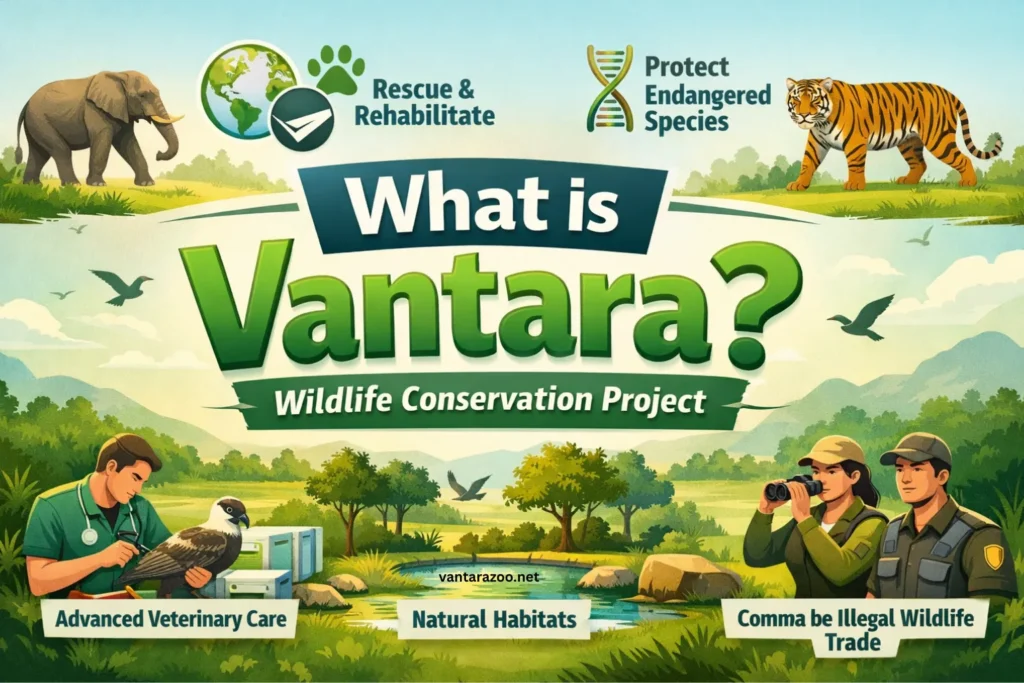
What is Vantara? It is a large-scale wildlife rescue, rehabilitation, and conservation initiative created to protect animals that are injured, abused, abandoned, or facing extinction. Vantara is designed to provide a safe, natural, and scientific environment where animals can heal, live with dignity, and, when possible, return to the wild.
Vantara has gained national and international attention because of its size, vision, and modern approach to animal welfare. It is not a zoo or a tourist attraction. Instead, it focuses on long-term care, ethical treatment, and conservation-based solutions for wildlife protection.
What is Vantara and Why Was It Created?
What is Vantara at its core is a response to growing threats faced by wildlife due to habitat loss, illegal trafficking, climate change, and human-animal conflict. Many animals rescued from circuses, illegal trade, roadside performances, or unsafe captivity have nowhere suitable to go. Traditional rescue centers are often overcrowded and lack advanced medical facilities.
Vantara was created to solve this problem on a large and permanent scale. The project aims to bring together veterinary science, conservation research, and natural habitats in one integrated ecosystem. Its goal is not just survival of animals, but their physical and mental well-being.
The vision behind Vantara is to treat animals with compassion while using modern science to improve rescue and rehabilitation outcomes.
Where Is Vantara Located?
Vantara is located in the Jamnagar region of Gujarat, India. The area was carefully chosen because it allows the creation of vast, open, and natural enclosures that closely match animals’ original habitats. The project spans thousands of acres, making it one of the largest wildlife care initiatives in the world.
The land design includes forests, grasslands, wetlands, and protected zones. This allows different species to live in environments that suit their natural behavior, rather than being confined to small spaces.
Who Is Behind the Vantara Project?
Vantara is an initiative supported by Anant Ambani, with backing from the Reliance Industries group. The project reflects a long-term commitment to environmental protection, animal welfare, and sustainable development.
The team behind Vantara includes wildlife experts, veterinarians, conservation scientists, and animal behavior specialists from India and abroad. Their combined expertise ensures that international standards of animal care are followed.
What is Vantara’s Main Purpose?
What is Vantara meant to achieve can be explained through its core objectives.
The first purpose is rescue. Animals that are injured, trafficked, mistreated, or displaced are brought to Vantara for immediate care.
The second purpose is rehabilitation. Animals receive medical treatment, proper nutrition, and psychological support to recover from trauma.
The third purpose is lifelong care. Animals that cannot be released back into the wild are given permanent, dignified living spaces.
The fourth purpose is conservation. Vantara works to protect endangered species and support breeding programs that help maintain genetic diversity.
The fifth purpose is research and education. The project supports scientific research that improves wildlife protection methods.
What Types of Animals Are Cared for at Vantara?
Vantara provides care for a wide range of species. These include large mammals, birds, reptiles, and rare or endangered animals. Many of these animals come from illegal captivity, circuses, roadside entertainment, or conflict zones where they were injured.
Large animals such as elephants, lions, leopards, and bears receive special attention because they often suffer the most from human exploitation. Smaller animals, birds, and reptiles are also cared for using species-specific treatment plans.
Each animal is assessed individually so that its unique physical and emotional needs are met.
Advanced Veterinary Care at Vantara
One of the strongest features of Vantara is its world-class veterinary infrastructure. The project includes advanced animal hospitals equipped with modern diagnostic tools, surgical units, and recovery centers.
Specialists in wildlife medicine treat complex injuries, chronic illnesses, and trauma-related conditions. Rehabilitation is slow and careful, ensuring animals are not stressed or rushed back into unsuitable conditions.
Veterinary teams also focus on preventive care, regular health monitoring, and nutrition planning.
How Vantara Ensures Natural Living Conditions
What is Vantara doing differently from traditional animal facilities is its emphasis on natural living environments. Animals are not kept in cages unless medically necessary. Instead, they live in large, open enclosures designed to replicate forests, grasslands, or wetlands.
These spaces allow animals to move freely, socialize naturally, and express instinctive behaviors. This approach greatly improves mental health and reduces stress-related problems.
Environmental enrichment is also used. This includes natural obstacles, water bodies, climbing areas, and feeding techniques that encourage natural hunting or foraging behavior.
Role of Conservation and Breeding Programs
Conservation is a major pillar of Vantara. The project supports carefully managed breeding programs for endangered species. These programs follow strict ethical guidelines to ensure animal welfare is never compromised.
The aim is not commercial breeding but species preservation. In some cases, animals bred at Vantara may be reintroduced into protected wild habitats under expert supervision.
Genetic research helps maintain healthy populations and avoid inbreeding.
What is Vantara’s Role in Combating Illegal Wildlife Trade?
Illegal wildlife trade is one of the biggest threats to global biodiversity. What is Vantara contributing in this area is safe rehabilitation for animals rescued from trafficking networks.
Many trafficked animals arrive injured, malnourished, or psychologically traumatized. Vantara provides long-term care that smaller rescue centers often cannot afford.
By offering a permanent solution, Vantara supports law enforcement agencies and wildlife authorities in cracking down on illegal trade.
Is Vantara Open to the Public?
Vantara is not designed as a regular tourist attraction. Public access is highly restricted to protect animals from stress and disturbance. The primary focus remains care, recovery, and conservation rather than entertainment.
However, controlled educational visits and research collaborations may be allowed for professionals, students, and conservation partners. This helps spread awareness while maintaining strict animal welfare standards.
Educational and Research Contributions of Vantara
Education is an important part of Vantara’s mission. The project supports research in wildlife medicine, animal behavior, and conservation science.
Data collected from rehabilitation cases helps improve rescue techniques across India. Training programs for veterinarians and wildlife workers raise overall standards of animal care.
Public awareness campaigns focus on humane treatment of animals and the importance of protecting natural ecosystems.
How Vantara Supports Sustainability
Sustainability is built into the design and operation of Vantara. Renewable energy, water conservation systems, and eco-friendly construction methods are used wherever possible.
Waste management practices ensure minimal environmental impact. Natural vegetation is preserved and expanded to support local biodiversity.
This sustainable approach ensures that wildlife protection does not come at the cost of environmental damage.
What Makes Vantara Unique Compared to Other Wildlife Centers?
What is Vantara offering that sets it apart is scale combined with quality. Many rescue centers do important work but operate with limited resources. Vantara brings global expertise, advanced technology, and vast natural spaces together in one project.
Its long-term vision ensures animals are not just rescued temporarily but cared for throughout their lives if needed. The focus on mental health, natural behavior, and ethical care makes it a model for future wildlife initiatives.
Challenges Faced by a Project Like Vantara
Running a project of this size comes with challenges. Managing diverse species requires specialized knowledge and constant monitoring. Long-term funding, skilled staff, and coordination with authorities are ongoing responsibilities.
There is also the challenge of balancing public interest with animal privacy. Vantara addresses this by keeping its mission clear and animal-focused.
Despite these challenges, the project continues to evolve and improve.
Why Vantara Matters for the Future of Wildlife Conservation
Wildlife conservation requires large, long-term solutions. What is Vantara demonstrating is that compassionate care and scientific planning can work together effectively.
As habitats shrink and human-animal conflict increases, projects like Vantara become essential safety nets for vulnerable species. They also inspire governments, organizations, and individuals to take animal welfare seriously.
Vantara represents hope, responsibility, and respect for life.
Also read: Vantara: A Revolutionary Wildlife Conservation and Rescue Initiative in India
Conclusion: on What is Vantara
What is Vantara can be summed up as a powerful step toward a more humane and responsible relationship between humans and animals. It is not just a rescue center, but a vision for ethical wildlife care, conservation, and sustainability.
By combining science, compassion, and scale, Vantara sets a new benchmark for wildlife protection in India and beyond. Its long-term impact may shape how future generations think about animal welfare and conservation.