
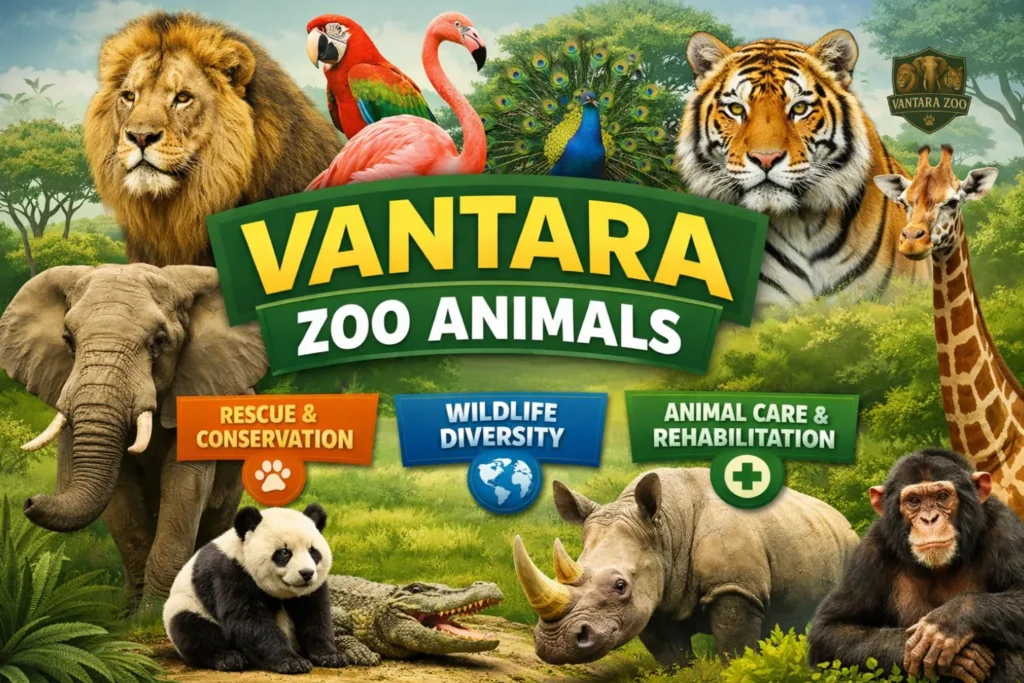
Vantara zoo animals represent one of the most diverse, well-protected, and carefully managed wildlife collections in India, created with a strong focus on animal welfare, rescue, and long-term conservation. Located in Jamnagar, Gujarat, Vantara has quickly become a topic of national and international interest due to its scale, purpose, and commitment to protecting endangered species.
Vantara is not just a tourist zoo. It is a large wildlife conservation and rehabilitation center developed to provide a safe, natural, and healthy environment for animals that have been rescued, injured, abandoned, or displaced. Every aspect of the project has been designed to support the physical and mental well-being of animals while educating people about wildlife protection.
Understanding the Vision Behind Vantara Zoo Animals
The concept of Vantara zoo animals goes far beyond display and entertainment. The zoo was created as a long-term conservation initiative that focuses on rescue, treatment, rehabilitation, and preservation of rare species. Many animals housed here come from difficult backgrounds such as illegal captivity, circuses, wildlife trafficking, or habitat loss.
The core idea is to give these animals a second chance at life in an environment that closely matches their natural habitat. Large open spaces, natural vegetation, climate-controlled shelters, and specialized veterinary care ensure that animals can live with dignity and comfort.
Diversity of Vantara Zoo Animals
One of the most impressive features of Vantara zoo animals is the sheer diversity of species. The zoo houses thousands of animals belonging to different regions of the world, including Asia, Africa, Europe, and the Americas. This diversity helps support breeding programs and genetic conservation.
Animals are grouped carefully based on their species, climate needs, social behavior, and dietary requirements. This scientific approach reduces stress and supports natural behavior patterns, making Vantara a true conservation-driven facility.
Big Cats at Vantara Zoo
Big cats are among the most admired Vantara zoo animals. These powerful predators are provided with large enclosures that allow them to roam, rest, and hunt-like behaviors in a controlled setting.
Lions and Asiatic Lions
Vantara is home to both African lions and the rare Asiatic lions. Asiatic lions are especially important as they are native to India and classified as endangered. These lions are kept in protected zones that help preserve their genetic strength and population stability.
Tigers and White Tigers
Tigers at Vantara include Bengal tigers and white tigers. These animals are given forest-style habitats with water bodies, shade, and natural terrain. Care is taken to ensure minimal human interference, allowing tigers to express natural instincts.
Leopards and Jaguars
Leopards and jaguars are also part of the Vantara zoo animals collection. Known for their agility and stealth, these cats are housed in enclosures designed with climbing structures and dense vegetation.
Elephants at Vantara Zoo
Elephants are among the most emotionally intelligent Vantara zoo animals, and their care requires special attention. Vantara has dedicated elephant care facilities with wide open grounds, mud baths, water pools, and medical centers.
Many elephants at Vantara have been rescued from poor working conditions or illegal captivity. Veterinary experts and caretakers work closely with them to restore physical health and emotional trust.
Herbivores and Grazing Animals
Herbivores form a major part of the Vantara zoo animals population. These animals help maintain ecological balance and are essential for educational awareness.
Deer Species
Vantara houses several species of deer, including spotted deer, sambar, barasingha, and exotic deer species. These animals live in large herds in grassland-style habitats that support natural grazing.
Giraffes and Zebras
Giraffes and zebras bring an African savanna experience to Vantara. Their enclosures are designed to simulate open plains, allowing them to move freely and interact socially.
Rhinos and Hippos
Rhinoceroses and hippopotamuses are also part of the Vantara zoo animals collection. These massive animals require special water-based habitats, which are carefully maintained to meet their needs.
Primates at Vantara Zoo
Primates are intelligent and social animals, and Vantara places strong emphasis on their mental stimulation and group living.
Monkeys and Langurs
Various species of monkeys and langurs live in semi-open forest enclosures. These habitats include trees, ropes, and platforms to support climbing and play.
Chimpanzees and Orangutans
Chimpanzees and orangutans are among the most sensitive Vantara zoo animals. Their enclosures include enrichment activities such as puzzles, feeding challenges, and social interaction spaces to prevent boredom and stress.
Birds at Vantara Zoo
Birdlife is an important part of Vantara zoo animals, adding color, sound, and ecological value to the environment.
Peacocks and Native Birds
Native Indian birds such as peacocks, parrots, and mynas are protected in open aviaries. These birds help educate visitors about local biodiversity.
Exotic and Migratory Birds
Vantara also houses exotic birds like macaws, flamingos, and cranes. Large walk-in aviaries allow birds to fly freely, creating a near-natural experience.
Reptiles and Amphibians at Vantara Zoo
Reptiles may not always receive the same attention as mammals, but they play a vital role in ecosystems.
Snakes and Lizards
Vantara zoo animals include both venomous and non-venomous snakes, along with monitor lizards and iguanas. These reptiles are kept in climate-controlled enclosures that match their natural habitats.
Crocodiles and Turtles
Crocodiles and turtles live in specially designed aquatic zones. These areas ensure safety while allowing animals to thrive in water-based environments.
Aquatic Life at Vantara Zoo
Aquatic Vantara zoo animals include freshwater and marine species. Large tanks and ponds are designed to maintain water quality, temperature, and natural movement.
Fish species from rivers and oceans are displayed mainly for educational and conservation purposes, highlighting the importance of clean water ecosystems.
Veterinary Care for Vantara Zoo Animals
One of the strongest pillars of Vantara is its advanced veterinary infrastructure. The zoo has modern hospitals, diagnostic labs, operation theaters, and quarantine zones.
Experienced veterinarians, wildlife experts, and animal caretakers work around the clock. Regular health checks, balanced diets, and mental enrichment are part of daily animal care routines.
Rescue and Rehabilitation Programs
A major reason Vantara zoo animals stand out is the rescue and rehabilitation work. Animals rescued from illegal trade, circuses, roadside shows, and conflict zones are brought here for treatment.
Once recovered, animals are either kept in lifelong care or prepared for reintroduction into protected forests when possible. This makes Vantara a crucial part of India’s wildlife rescue network.
Conservation and Breeding Initiatives
Vantara actively participates in breeding programs for endangered species. Scientific breeding helps maintain genetic diversity and prevent extinction.
These conservation efforts are coordinated with national and international wildlife organizations to ensure ethical and effective outcomes.
Educational Value of Vantara Zoo Animals
Education is a key goal of Vantara. Visitors learn about animal behavior, conservation challenges, and the impact of human activities on wildlife.
Through guided tours, awareness programs, and research partnerships, Vantara encourages people to respect and protect animals in the wild.
Ethical Approach to Animal Display
Unlike traditional zoos, Vantara focuses on ethical animal care. Animals are not forced to perform or interact unnaturally with humans.
Enclosures are designed to reduce stress, noise, and crowd pressure. The aim is to observe animals respectfully rather than treat them as entertainment.
Also read: Vantara Zoo Ticket Price: Complete Visitor Cost Guide for 2026
Role of Vantara in India’s Wildlife Future
Vantara zoo animals represent a new direction in wildlife conservation in India. The project shows how large-scale private initiatives can support national conservation goals.
By combining science, compassion, and long-term planning, Vantara sets an example for future wildlife facilities across the country.
Why Vantara Zoo Animals Are Globally Important
The global wildlife crisis requires safe spaces where animals can recover and populations can grow. Vantara contributes to this global effort by protecting rare species and sharing conservation knowledge.
Its scale and purpose make it one of the most significant wildlife conservation projects in the world.
Also read: Vantara Ticket Booking: Complete Guide for Visitors in Simple English
Conclusion
Vantara zoo animals symbolize hope, care, and responsibility toward wildlife. This massive conservation center is not just about showcasing animals but about giving them protection, dignity, and a chance to thrive.
Through rescue, rehabilitation, ethical care, and education, Vantara stands as a powerful reminder that humans can coexist with wildlife in a respectful and sustainable way.