
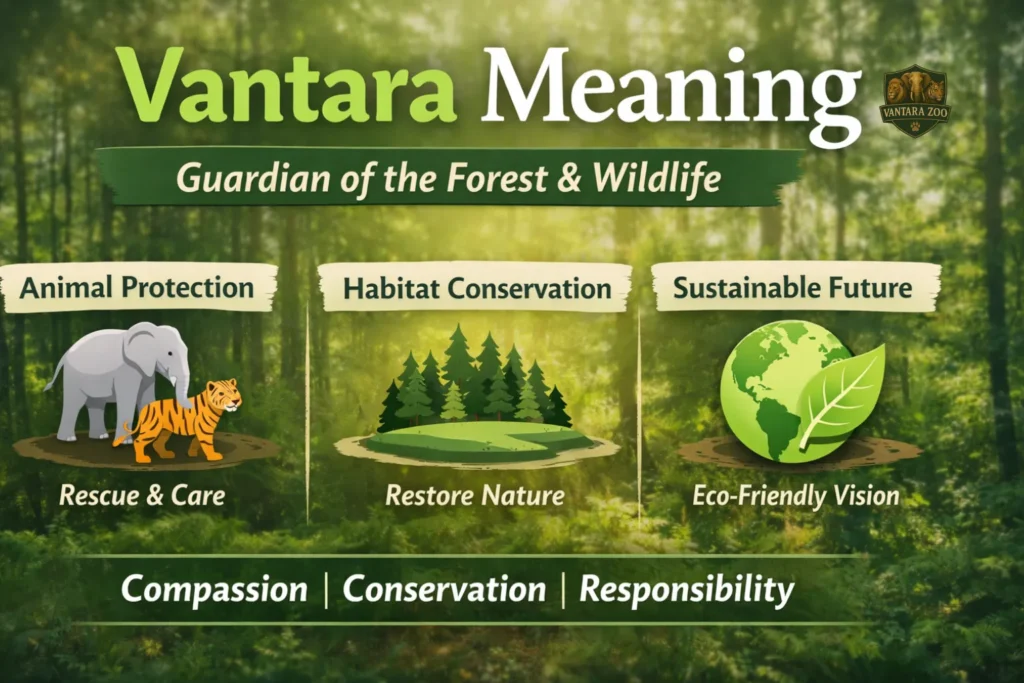
Vantara Meaning refers to a powerful idea rooted in nature, care, and responsibility toward wildlife and the environment. The word “Vantara” is increasingly used to describe a modern conservation vision that focuses on protecting animals, restoring ecosystems, and creating harmony between humans and nature. To fully understand Vantara Meaning, it is important to explore its linguistic roots, cultural significance, environmental philosophy, and its role in modern wildlife conservation.
What Is the Literal Vantara Meaning
The word “Vantara” is derived from ancient Indian languages, mainly Sanskrit-based terminology. It is formed from two core ideas. “Van” means forest, wilderness, or natural habitat, while “Tara” broadly refers to protector, caretaker, or guiding force. When combined, Vantara Meaning becomes “protector of the forest” or “guardian of wildlife.”
This meaning perfectly reflects the philosophy behind the name. Vantara is not just a word but a concept that represents care, shelter, healing, and long-term protection of animals and natural ecosystems.
Vantara Meaning in Indian Cultural Context
In Indian culture, forests and wildlife have always been treated with respect. Ancient texts describe forests as sacred spaces where life thrives in balance. The Vantara Meaning aligns deeply with this traditional belief system.
Historically, forests were seen as places of learning, healing, and spiritual growth. Protecting animals was considered a duty rather than a choice. Vantara Meaning revives this cultural value in a modern and organized form, making it relevant for today’s environmental challenges.
Why the Name Vantara Is So Significant
The choice of the name Vantara is not accidental. It was selected to reflect responsibility, compassion, and sustainability. The Vantara Meaning clearly communicates a mission of protection rather than exhibition.
Unlike traditional zoos or wildlife parks, Vantara represents a safe space where rescued animals receive care, medical treatment, and rehabilitation. The name itself sets expectations of ethical conservation and humane treatment.
Vantara Meaning in Modern Wildlife Conservation
In today’s world, wildlife faces threats such as habitat loss, illegal trade, climate change, and human conflict. The Vantara Meaning fits perfectly into modern conservation efforts by focusing on rescue, recovery, and long-term care.
Vantara is designed as a conservation initiative rather than a tourist attraction. Its purpose is to provide animals with a secure environment that mimics their natural habitats as closely as possible. This modern interpretation of Vantara Meaning highlights responsibility over entertainment.
The Philosophy Behind Vantara Meaning
The philosophy of Vantara Meaning is based on three main pillars: compassion, science, and sustainability.
Compassion ensures that animals are treated with dignity and care. Science supports advanced veterinary treatment, research, and rehabilitation methods. Sustainability ensures that conservation efforts do not harm the environment and continue for future generations.
Together, these principles transform Vantara Meaning into a living philosophy rather than just a definition.
Vantara Meaning and Animal Welfare
Animal welfare is central to understanding Vantara Meaning. Many animals arrive at Vantara after being rescued from illegal captivity, abuse, or severe injury. The focus is not on display but on recovery.
Animals are given spacious enclosures, proper nutrition, medical attention, and psychological care. This approach reflects the true essence of Vantara Meaning, where protection and healing come first.
How Vantara Meaning Differs from Zoos and Safari Parks
Many people mistakenly compare Vantara to zoos or safari parks. However, the Vantara Meaning clearly sets it apart.
Zoos primarily focus on public viewing, while Vantara focuses on animal recovery and conservation. Safari parks emphasize tourism, while Vantara emphasizes long-term welfare. This distinction is crucial to understanding why tourism is not the core purpose of Vantara.
Vantara Meaning in Environmental Education
Another important aspect of Vantara Meaning is education. Conservation is incomplete without awareness. Vantara aims to educate people about wildlife protection, ethical treatment of animals, and environmental responsibility.
Educational programs, research initiatives, and awareness campaigns are part of this broader mission. Through education, Vantara Meaning extends beyond physical boundaries and influences society at large.
Vantara Meaning and Biodiversity Protection
Biodiversity is essential for a healthy planet. Vantara Meaning includes protecting diverse species, especially those that are endangered or rescued from unsafe conditions.
By providing a secure environment for animals, Vantara contributes indirectly to biodiversity conservation. Healthy animals can help preserve genetic diversity, which is critical for ecological balance.
The Role of Vantara in Wildlife Rescue Operations
Wildlife rescue is one of the most practical expressions of Vantara Meaning. Animals rescued from illegal trade, circuses, private ownership, or disaster situations often arrive in critical condition.
Vantara provides immediate medical care followed by long-term rehabilitation. Some animals may never return to the wild, but they are given a life of dignity and comfort. This compassionate approach defines the real-world application of Vantara Meaning.
Vantara Meaning and Ethical Responsibility
Ethics play a major role in Vantara Meaning. The initiative emphasizes moral responsibility toward animals that cannot protect themselves.
This ethical foundation rejects exploitation and promotes coexistence. Vantara stands as a reminder that human progress should not come at the cost of wildlife suffering.
Vantara Meaning in the Context of Sustainable Development
Sustainability is a key global goal, and Vantara Meaning fits well within this framework. Conservation efforts at Vantara are designed to minimize environmental impact while maximizing animal welfare.
Green infrastructure, responsible water usage, and eco-friendly practices ensure that protecting animals does not harm nature itself. This balance reflects the deeper environmental wisdom behind Vantara Meaning.
Vantara Meaning and Community Impact
Vantara also creates positive impact on surrounding communities. Employment opportunities, educational outreach, and environmental awareness programs help local people connect with conservation efforts.
By involving communities, Vantara Meaning becomes inclusive rather than isolated. It encourages people to see wildlife protection as a shared responsibility.
The Spiritual Side of Vantara Meaning
For many, Vantara Meaning also carries a spiritual dimension. Protecting life is considered a noble act in many belief systems. Caring for animals is seen as an expression of compassion and humility.
This spiritual aspect strengthens the emotional connection people feel toward Vantara and its mission.
Also read: Vantara Jamnagar: India’s Landmark Wildlife Conservation and Animal Welfare Initiative
Vantara Meaning and India’s Conservation Vision
India is home to rich biodiversity and ancient conservation traditions. Vantara Meaning reflects India’s evolving approach to wildlife protection by combining tradition with technology.
Initiatives like Vantara represent a modern expression of this vision, where conservation is guided by science, ethics, and cultural values.
Why Vantara Meaning Matters Globally
Wildlife conservation is a global concern. The Vantara Meaning resonates beyond India because the challenges faced by animals are universal.
Habitat loss, climate change, and illegal wildlife trade affect ecosystems worldwide. Vantara offers a model that other regions can learn from, making its meaning globally relevant.
Also read: Vantara: A Revolutionary Wildlife Conservation and Rescue Initiative in India
Common Misunderstandings About Vantara Meaning
Some people believe Vantara is only a facility or a physical location. In reality, Vantara Meaning goes far beyond infrastructure.
It is a mindset that prioritizes protection over profit, care over control, and responsibility over convenience. Understanding this clears many misconceptions.
The Future Vision Connected to Vantara Meaning
The future of Vantara Meaning lies in expansion of conservation research, stronger rescue networks, and greater public awareness.
As environmental challenges grow, initiatives like Vantara may play an even more important role. The meaning of Vantara will continue to evolve while staying rooted in its core values.
Conclusion: The True Essence of Vantara Meaning
Vantara Meaning represents protection, compassion, and responsibility toward wildlife and nature. It is not just a name but a powerful idea that blends cultural wisdom with modern conservation science.
By focusing on animal welfare, ethical responsibility, and environmental sustainability, Vantara Meaning offers hope for a future where humans and wildlife can coexist peacefully. Understanding this meaning helps us appreciate why such initiatives are vital in today’s world and why the name Vantara carries such deep and lasting significance.