
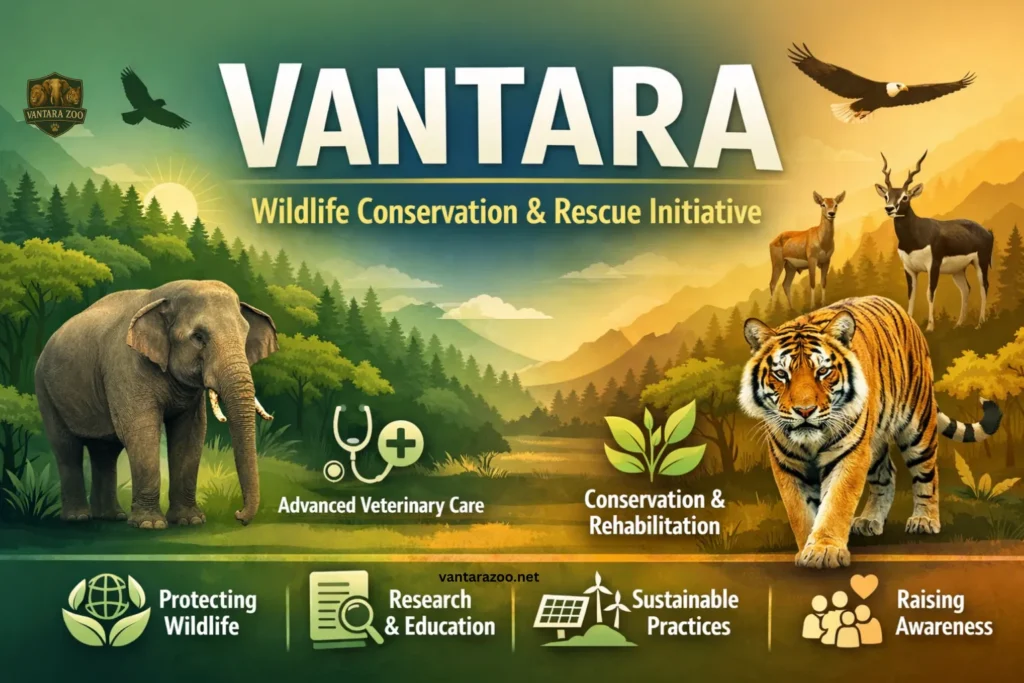
Vantara is a large-scale wildlife conservation, rescue, and rehabilitation initiative in India that is designed to protect animals, restore natural habitats, and promote ethical care for wildlife. From the very first step, Vantara focuses on compassion, science, and sustainability, making it one of the most ambitious animal welfare projects ever created in the country.
Vantara is not just another zoo or animal park. It is a carefully planned ecosystem where rescued, injured, abused, and endangered animals are given a safe environment to heal and live with dignity. The project combines modern veterinary science with natural living spaces to ensure animals experience minimal stress and maximum care.
What Is Vantara and Why It Matters
Vantara is a wildlife rescue and conservation center developed with the goal of creating a safe haven for animals that can no longer survive in the wild due to injury, illegal trade, habitat loss, or human conflict. The name Vantara reflects the idea of a protected forest space where animals can live freely under expert supervision.
Unlike traditional animal facilities, Vantara is built on the principle of welfare-first care. Every animal is treated as a living being with physical and emotional needs. This approach sets Vantara apart from conventional zoological parks and makes it a global example of responsible wildlife management.
The importance of Vantara lies in its long-term vision. It does not focus only on rescuing animals but also on conserving biodiversity, educating people, and supporting research that can help protect wildlife for future generations.
The Vision Behind Vantara
The vision of Vantara is rooted in respect for nature and responsibility toward animals. The project aims to correct the damage caused by human activities such as deforestation, poaching, illegal animal trade, and poor captivity conditions.
Vantara is designed as a sanctuary where animals are not displayed for entertainment but are cared for in environments that closely resemble their natural habitats. The focus is on healing, rehabilitation, and, where possible, reintroduction into protected natural areas.
Another key part of the Vantara vision is awareness. By showcasing ethical animal care and conservation practices, Vantara encourages society to develop empathy toward wildlife and understand the importance of coexistence.
Location and Scale of Vantara
Vantara is located in Gujarat, India, and spreads across a vast area designed to support different ecosystems. The large land area allows the creation of open habitats, forest zones, water bodies, and specialized enclosures suited to different species.
The scale of Vantara is one of its strongest features. It is capable of housing thousands of animals, including mammals, birds, and reptiles, each with species-specific care plans. This scale makes it possible to rescue animals from across India and even from international locations when required.
The design ensures that animals have enough space to move freely, socialize naturally, and live in stress-free conditions. This large-scale planning reflects a deep understanding of animal behavior and welfare.
Types of Animals Cared for at Vantara
Vantara provides care for a wide variety of animals, ranging from large mammals to small birds and reptiles. Many of these animals are rescued from illegal captivity, circuses, roadside shows, or unsafe private ownership.
Large animals such as elephants, lions, tigers, and bears receive special attention due to their complex physical and emotional needs. Vantara has dedicated zones for each species to ensure proper space, diet, and social interaction.
Smaller animals, birds, and reptiles are also an important part of the Vantara ecosystem. Each species is given an environment that matches its natural behavior, whether that means tree-filled areas, water-rich habitats, or quiet spaces for recovery.
Advanced Veterinary Care at Vantara
One of the strongest pillars of Vantara is its advanced veterinary infrastructure. The facility includes modern hospitals, diagnostic labs, operation theaters, and rehabilitation centers designed specifically for wildlife.
Veterinary experts at Vantara use advanced medical technology along with traditional care methods to treat injuries, illnesses, and psychological trauma. Many rescued animals arrive in critical condition, and Vantara provides round-the-clock medical attention to help them recover.
The veterinary team does not only treat animals but also focuses on preventive care. Regular health checkups, balanced nutrition plans, and enrichment activities are used to ensure long-term well-being.
Rehabilitation and Psychological Healing
Rescue is only the first step at Vantara. Rehabilitation is equally important, especially for animals that have suffered abuse or neglect. Many rescued animals show signs of fear, aggression, or depression due to past trauma.
Vantara uses behavioral enrichment programs to help animals regain confidence and natural instincts. These programs include mental stimulation, social interaction, and gradual exposure to natural environments.
Psychological healing is treated with the same importance as physical recovery. Caregivers and experts closely monitor animal behavior to ensure emotional stability and comfort.
Conservation and Biodiversity Protection
Vantara plays a vital role in conservation by protecting species that are endangered or vulnerable. Through breeding programs, genetic management, and habitat protection, the project contributes to preserving biodiversity.
The facility works with conservation experts to maintain healthy animal populations and prevent genetic disorders. These efforts help ensure that rescued animals can live long, healthy lives.
Vantara also supports habitat conservation beyond its boundaries by raising awareness about forest protection and wildlife corridors, which are essential for the survival of many species.
Research and Education at Vantara
Education and research are core components of Vantara. The center provides opportunities for scientists, veterinarians, and conservationists to study animal behavior, health, and rehabilitation methods.
Research conducted at Vantara helps improve wildlife care standards not only in India but around the world. The findings are used to develop better rescue techniques, treatment protocols, and habitat designs.
Education programs at Vantara aim to inform visitors, students, and professionals about wildlife conservation. These programs help build a deeper understanding of the challenges animals face and the role humans play in protecting them.
Ethical Approach to Animal Welfare
Vantara follows strict ethical guidelines to ensure animals are treated with respect and dignity. There is no forced entertainment, unnatural performances, or exploitation of animals for profit.
The goal is to provide a peaceful life for animals that cannot return to the wild while ensuring their natural behaviors are respected. This ethical approach builds trust and sets a new standard for wildlife facilities.
Transparency and accountability are also important at Vantara. Regular monitoring and expert oversight ensure that animal welfare remains the top priority at all times.
How Vantara Supports Global Wildlife Efforts
Vantara is not limited to local impact. It collaborates with international wildlife organizations, rescue groups, and experts to share knowledge and resources.
Through these partnerships, Vantara contributes to global discussions on animal welfare, conservation strategies, and ethical rescue operations. This global connection helps improve standards and practices worldwide.
By setting an example of large-scale, responsible wildlife care, Vantara inspires similar initiatives in other countries.
Vantara and Sustainable Development
Sustainability is deeply integrated into the design and operation of Vantara. The facility uses eco-friendly practices such as water conservation, renewable energy, and waste management systems.
Natural landscaping and native plant species help maintain ecological balance while reducing environmental impact. These practices ensure that Vantara supports nature rather than harming it.
Sustainable development at Vantara proves that large conservation projects can coexist with environmental responsibility.
Public Awareness and Social Impact
Vantara plays a powerful role in shaping public attitudes toward animals. By highlighting rescue stories and conservation efforts, it encourages people to think differently about wildlife.
The project promotes kindness, responsibility, and respect for all living beings. This social impact is one of the most valuable outcomes of Vantara’s work.
As awareness grows, more people are inspired to support conservation efforts and reject practices that harm animals.
The Future of Vantara
The future of Vantara is focused on expansion, innovation, and deeper conservation impact. Plans include adding more specialized habitats, improving medical facilities, and expanding education programs.
Vantara aims to rescue more animals, support more research, and reach a wider audience with its message of compassion and coexistence.
With continued support and responsible management, Vantara has the potential to become a global benchmark for wildlife rescue and rehabilitation.
Why Vantara Is a Landmark Initiative
Vantara stands as a landmark initiative because it combines compassion, science, ethics, and sustainability in one unified vision. It addresses urgent wildlife issues while offering long-term solutions.
By prioritizing animal welfare and conservation, Vantara proves that development and nature protection can work together.
In a world facing rapid environmental change, Vantara represents hope, responsibility, and a future where humans and wildlife can coexist in harmony.