
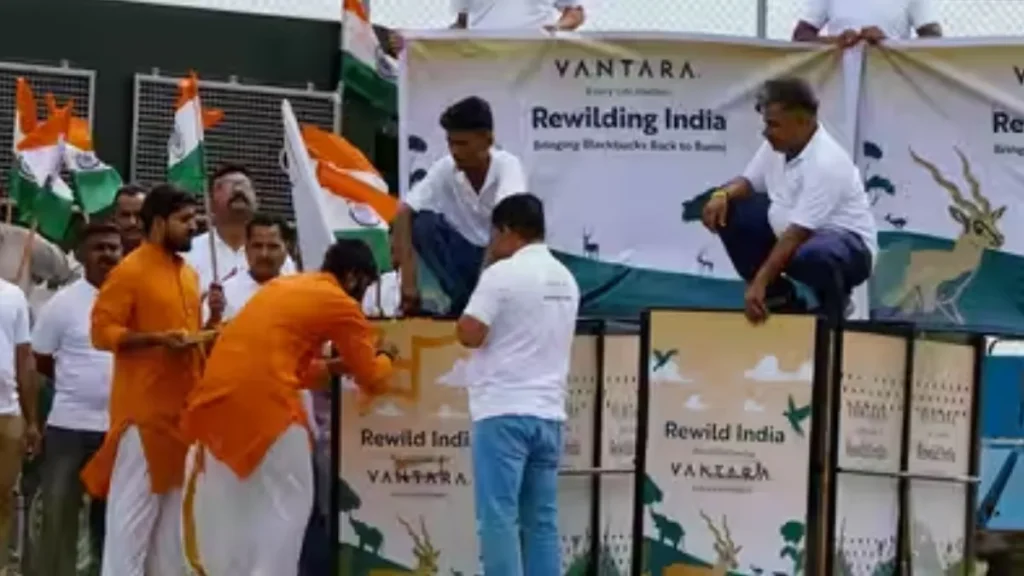
GZRRC: Twenty blackbucks have been reintroduced into the Banni grasslands of Kutch, Gujarat, in a wildlife conservation initiative carried out by the Gujarat Forest Department with technical support from the Green Zoological Rescue and Rehabilitation Centre (GZRRC), Vantara. The rewilding exercise was conducted around India’s 80th Independence Day and is being viewed as an important step toward restoring native herbivore populations in one of the country’s significant grassland ecosystems.
The group consisted of 15 female and five male blackbucks. The animals were transported from Vantara in Jamnagar to the Banni grasslands before being released into a designated natural habitat. The translocation was carried out after the required approvals from the Chief Wildlife Warden and the Central Zoo Authority, with animal health and welfare procedures followed throughout the process.
GZRRC Plays Key Technical Role in Blackbuck Rewilding
The GZRRC, Vantara, provided technical assistance to the Gujarat Forest Department during the rewilding programme. Such operations require considerably more than simply moving animals from one location to another. Wildlife experts must assess the health of each animal, prepare them for transportation, minimise stress during the journey and ensure that they are suitable for release into a natural environment.
Before their movement to Kutch, the blackbucks underwent veterinary examinations and health screening. Quarantine and disease-monitoring measures were also part of the preparation process. These precautions are important because wildlife translocation can create health risks for both the relocated animals and existing populations if proper screening is not carried out.
Once the required checks were completed, the animals were transported to Banni under controlled conditions and released at the selected location.
Why the Return of Blackbucks Matters for Banni
Banni is one of Gujarat’s best-known grassland landscapes and has major ecological importance. The region supports a variety of wildlife while also being closely connected with the traditional livelihoods of local pastoral communities.
Blackbucks are native herbivores and an important component of grassland ecosystems. Their presence contributes to the natural food chain and forms part of the ecological relationship between grazing animals, vegetation and predators.
Banni is also home to other herbivores, including chinkara and nilgai, along with wild boar and other wildlife. Strengthening native herbivore populations can therefore contribute to the wider ecological balance of the grassland.
The significance of the latest release goes beyond the number of animals involved. Rewilding programmes are generally designed to restore ecological functions and help native species establish sustainable populations in suitable habitats.
Wildlife Health Was a Major Priority Before Release
Moving wildlife into a natural habitat involves several stages of preparation. The 20 blackbucks were not simply transported from Jamnagar and immediately released.
Veterinary teams first assessed their overall condition and carried out health screening. Quarantine and disease surveillance measures helped reduce the possibility of transferring infections between wildlife populations.
The transportation itself also needed to be managed carefully. Wild animals can experience significant stress during long-distance movement, making appropriate handling, containment and veterinary supervision essential.
These steps are particularly important in rewilding projects because the ultimate objective is not only to release animals safely but also to give them the best possible chance of adapting to their new surroundings.
Rewilding Requires Long-Term Monitoring
The release of an animal into the wild is only the beginning of a rewilding programme. Conservation authorities need to monitor what happens after the release to determine whether the animals are adapting successfully.
Factors such as habitat quality, availability of food and water, health, movement patterns, survival, reproduction and interaction with the surrounding ecosystem can all influence the long-term outcome.
For the blackbucks released in Banni, continued observation will be important in understanding how effectively they adapt to the grassland environment. Monitoring can also help conservation managers identify potential challenges and make informed decisions about future wildlife restoration programmes.
The involvement of local communities is another important aspect of long-term conservation. Banni has a strong connection with pastoral communities, making cooperation between forest officials, conservation specialists and local residents particularly valuable for protecting the region’s ecological character.
Part of a Wider Wildlife Conservation Effort in Gujarat
The Banni blackbuck release forms part of broader efforts to strengthen populations of native herbivores and restore wildlife habitats in Gujarat.
Vantara has previously worked with the Gujarat Forest Department on wildlife restoration initiatives. Reports have also highlighted its technical support in efforts involving the reintroduction of chital into the Barda Wildlife Sanctuary.
Such programmes are intended to restore native species and, more broadly, rebuild ecological relationships within landscapes where wildlife populations have declined or require additional conservation support.
For grassland ecosystems, maintaining healthy populations of native herbivores can be especially important because grazing animals influence vegetation patterns while also serving as part of the food base for predators.
What Role Did Vantara and GZRRC Provide?
The Gujarat Forest Department remained the principal government agency responsible for the rewilding operation, while GZRRC, Vantara, contributed technical expertise.
Vantara’s wildlife conservation work includes animal rescue, veterinary care, rehabilitation and support for conservation programmes. In a translocation project such as this one, technical expertise can be required at multiple stages, including health assessment, animal handling, transportation, rehabilitation planning and preparation for release.
The cooperation between a government wildlife agency and a specialised conservation facility demonstrates how different organisations can work together on species restoration and habitat-based conservation.
Key Details of the Banni Blackbuck Rewilding Programme
| Details | Information |
|---|---|
| Location | Banni Grasslands, Kutch, Gujarat |
| Animals Rewilded | 20 blackbucks |
| Male Blackbucks | 5 |
| Female Blackbucks | 15 |
| Species | Blackbuck |
| Scientific Name | Antilope cervicapra |
| Source | Vantara, Jamnagar |
| Government Agency | Gujarat Forest Department |
| Technical Support | GZRRC, Vantara |
| Occasion | India’s 80th Independence Day |
| Approvals | Chief Wildlife Warden and Central Zoo Authority |
| Primary Objective | Native wildlife restoration and strengthening the Banni grassland ecosystem |
Also read: Thiruvananthapuram Zoo Welcomes Zebras After Nine Years, Sends King Cobra to Vantara
Independence Day Initiative Highlights Wildlife Conservation
The return of 20 blackbucks to Banni during the 80th Independence Day period carries a wider conservation message. Protecting wildlife is not limited to keeping animals in controlled environments. Long-term conservation also involves restoring suitable natural habitats and creating conditions in which native species can survive and reproduce in the wild.
Grasslands such as Banni are an important part of India’s natural heritage. They support wildlife, vegetation and traditional pastoral livelihoods, making their ecological health important from both conservation and community perspectives.
The latest blackbuck rewilding initiative represents one step in that larger effort. Its long-term success will depend on continued habitat management, scientific monitoring and cooperation among government agencies, conservation organisations and local communities.
If the released animals successfully adapt, survive and reproduce in Banni, the programme could contribute to the gradual strengthening of the region’s native herbivore population. More importantly, it could demonstrate how carefully planned wildlife translocation, supported by scientific expertise from organisations such as GZRRC, can contribute to restoring India’s natural ecosystems.
The release of these 20 blackbucks therefore represents more than a single wildlife relocation exercise. It is part of a broader approach to conservation in which the goal is to give native species a stronger presence in the landscapes where they naturally belong.