
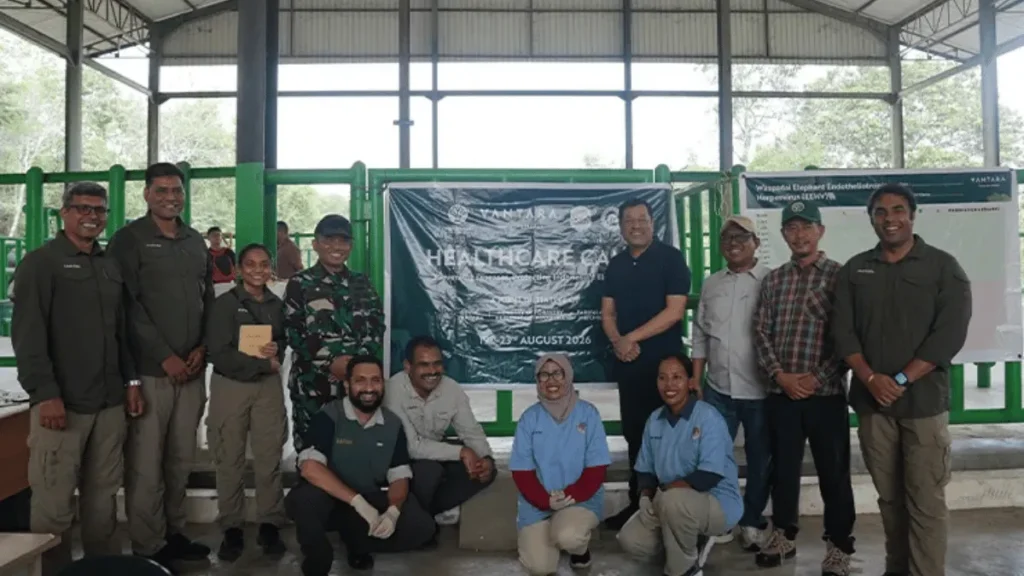
Indonesia Expands Wildlife Protection Efforts With Support From Vantara
Indonesia is taking a major step toward strengthening wildlife health, animal welfare and conservation with a new partnership involving Vantara, the wildlife conservation organisation founded by Anant Ambani, Executive Director of Reliance Industries Limited.
The Indonesian government has announced a series of new initiatives aimed at improving wildlife healthcare, veterinary services, field-level conservation capabilities and the long-term protection of animals in their natural habitats. The programme brings together the Government of Indonesia, Vantara and Indonesian wildlife organisation PT Fauna Land Group in an effort to build stronger conservation infrastructure and local expertise.
The announcement was made by Raja Juli Antoni, Minister of Forestry of the Republic of Indonesia, during a press conference in Jakarta on Monday. The initiatives are expected to provide practical support for wildlife professionals working across Indonesia while strengthening the country’s ability to respond to the healthcare and conservation needs of wild animals.
According to the Indonesian government, the partnership will focus on building local capacity and improving facilities while ensuring that the programmes remain under Indonesian ownership and management.
Raja Juli Antoni Highlights Indonesia’s Responsibility Toward Wildlife
Speaking about the new cooperation, Indonesia’s Forestry Minister Raja Juli Antoni stressed that protecting wildlife is a responsibility that requires adequate facilities, expertise and resources.
Antoni said the partnership with Vantara would help Indonesia strengthen its existing wildlife health and conservation infrastructure. He also made it clear that the facilities and programmes developed through the cooperation would remain under the ownership, operation and management of the Government of Indonesia and the relevant Indonesian authorities.
The minister said the objective is to ensure that the infrastructure created through the partnership continues to support Indonesia’s own conservation priorities and wildlife for generations.
The approach is particularly important for Indonesia, a country known for its extraordinary biodiversity and large number of unique and threatened species. The country’s forests, wetlands, islands and other ecosystems support a wide range of wildlife, making effective conservation and veterinary support an important part of protecting its natural heritage.
Vantara to Provide Veterinary Expertise and Technical Support
Under the new programme, Vantara will contribute specialist expertise in wildlife medicine, veterinary care, animal husbandry, animal welfare and conservation.
The organisation will also provide technical assistance, infrastructure support and capacity-building programmes in cooperation with Indonesian authorities and Fauna Land.
Vivaan Karani, CEO of Vantara, welcomed the partnership and said the organisation was grateful to the Indonesian government and its partners for the opportunity to contribute to wildlife conservation in the country.
Karani highlighted Indonesia’s biodiversity and described the opportunity to support the protection of its wildlife as an important responsibility. He also noted that Vantara has developed experience in areas including wildlife health, veterinary medicine, animal care and husbandry.
At the same time, he emphasised that the partnership would also allow Vantara to learn from Indonesia’s own conservation experience.
The focus, according to Karani, is on creating practical and lasting benefits for wildlife rather than simply providing short-term assistance.
That approach is reflected in the programme’s emphasis on training, infrastructure, veterinary support and field-based conservation activities.
10 Hospitals on Wheels Planned for Wildlife Across Indonesia
One of the major initiatives announced under the partnership is the introduction of 10 Hospitals on Wheels.
These mobile facilities are planned to provide veterinary and healthcare support for wild animals in their natural habitats across Indonesia. The concept is designed to take essential wildlife medical capabilities closer to animals and conservation areas instead of requiring every case to be transported to a permanent facility.
Providing medical treatment in the field can be particularly important for wildlife living in remote locations. Injured or sick animals may face additional risks when they have to be moved long distances for treatment.
The mobile hospitals are therefore expected to strengthen Indonesia’s in situ wildlife healthcare capabilities and help authorities respond more effectively to animals requiring medical attention in the field.
The programme will be supported by Vantara’s veterinary expertise and technical capabilities while working under programmes led by Indonesian authorities.
Way Kambas Elephant Hospital Set for Major Upgrade
Another key part of the cooperation is the planned upgrade of the Way Kambas Elephant Hospital.
The facility is expected to be transformed into the Elephant Treatment and Care Centre, with advanced equipment, tools and technologies designed to improve healthcare for Sumatran elephants.
The upgraded centre will support 62 Sumatran elephants under human care, while also serving the healthcare needs of nearly 100 wild Sumatran elephants living in the surrounding landscape.
The initiative is significant because the Sumatran elephant is among Indonesia’s most important wildlife conservation concerns. Protecting remaining populations requires not only habitat conservation but also effective veterinary care, disease management, injury treatment and trained personnel.
Improving a specialist elephant healthcare facility can therefore strengthen the wider conservation system by giving veterinarians and caregivers access to better equipment and treatment capabilities.
The Way Kambas initiative will also complement field-based conservation work by supporting animals both under human care and those living in surrounding natural landscapes.
Training for Elephant Caregivers, Veterinarians and Officials
Infrastructure alone cannot solve wildlife conservation challenges. Skilled people are equally important, which is why capacity building is another major component of the partnership.
The programme includes training for elephant caregivers, veterinarians and other officials involved in wildlife management across Indonesia.
The training is expected to help strengthen local knowledge and improve the ability of wildlife professionals to manage healthcare and animal welfare issues.
For elephant caregivers in particular, practical knowledge can play an important role in recognising health problems, maintaining animal welfare and working alongside veterinary teams.
For veterinarians, specialist training can help improve the diagnosis and treatment of wildlife cases, while government officials and wildlife managers can benefit from stronger technical understanding of conservation and animal care.
The long-term objective is to build local capacity so that Indonesian professionals can continue strengthening wildlife protection within the country’s own conservation system.
Partnership Covers In Situ and Ex Situ Conservation
The new initiatives are part of a broader cooperation framework between the Government of Indonesia and Vantara established through an existing Memorandum of Understanding, or MoU.
The agreement provides a framework for cooperation in wildlife health, animal welfare and conservation.
The areas identified for collaboration are aligned with Indonesia’s national conservation priorities. They include both in situ conservation, which focuses on protecting wildlife in natural habitats, and ex situ conservation, which involves wildlife managed outside its natural environment when necessary.
The broader partnership also includes wildlife health and veterinary care, conservation breeding, rehabilitation, rewilding, animal welfare and capacity building.
Other areas of cooperation may also be developed between the parties based on mutual agreement and Indonesia’s conservation requirements.
Focus on Conservation in Natural Habitats
A particularly important element of the partnership is its focus on in situ conservation.
While rescue, rehabilitation and long-term care can be necessary for individual animals, the long-term goal of conservation is often to maintain healthy wildlife populations in their natural habitats.
Vantara’s international conservation engagement is expanding its focus in this direction, with the organisation bringing experience developed at its Jamnagar facility into collaborations aimed at supporting wildlife health, animal care and conservation in natural landscapes.
The organisation’s in situ work includes native species restoration, habitat restoration, engagement with local communities and efforts to reduce human-wildlife conflict.
These activities can be particularly relevant in regions where wildlife habitats overlap with human settlements or agricultural areas.
Working with local authorities, conservation institutions and communities can help address the practical challenges that arise when people and wildlife share the same landscapes.
Vantara’s Five-Year Plan Expands International Conservation Engagement
The Indonesia partnership comes after Vantara released its Five-Year Plan and represents a significant expansion of its international conservation activities.
The organisation has developed its capabilities through its wildlife facility in Jamnagar, Gujarat, India, where its programmes include animal rescue, rehabilitation, treatment and long-term care where required.
Vantara’s work is supported by veterinary medicine, specialised infrastructure, species-specific nutrition and multidisciplinary teams.
The organisation is now extending this experience through partnerships intended to support wildlife welfare and conservation beyond India.
Its international engagement is also connected with its voluntary commitments to India’s CITES management authority to further support conservation of wildlife in natural habitats, or in situ conservation.
This broader direction reflects an effort to connect animal healthcare with habitat protection, conservation breeding, restoration and rewilding.
Also read: Vantara Maniki Elephant: 48-Year-Old Elephant Finally Sleeps Peacefully After Years of Pain
Conservation Breeding and Rewilding
Vantara’s conservation activities also include conservation breeding programmes designed to support the future restoration of viable wildlife populations.
The objective of such programmes is to help maintain or increase populations of species where appropriate, with the longer-term possibility of reintroducing suitable animals into natural habitats through carefully planned rewilding programmes.
Conservation breeding is only one part of a larger conservation strategy. Successful rewilding also requires suitable habitats, appropriate ecological conditions, protection from threats and long-term monitoring.
For this reason, Vantara’s broader conservation approach combines animal healthcare with habitat restoration and other measures aimed at supporting wildlife populations in the wild.
The organisation says these efforts are being undertaken both in India and internationally.
Role of PT Fauna Land Group in the Partnership
PT Fauna Land Group is another important partner in the new Indonesian programme.
The organisation works in Indonesia on wildlife conservation, animal welfare and biodiversity protection. Its experience includes wildlife care, conservation programmes and field-based activities.
Danny Gunalen, CEO of Fauna Land, said Indonesia’s extraordinary biodiversity comes with a shared responsibility to protect its wildlife.
Gunalen said Fauna Land was pleased to work with the Indonesian government and Vantara and bring together their respective knowledge and experience.
The organisation hopes that the cooperation will strengthen local capacity, improve infrastructure available to wildlife and create lasting benefits for both animals and the people working to protect them.
Fauna Land’s local experience is expected to complement Vantara’s veterinary and technical capabilities while the Indonesian government provides the institutional framework and leads the relevant conservation programmes.
Government of Indonesia to Retain Ownership and Management
A key feature of the cooperation is that the facilities and programmes established under the partnership will remain under Indonesian government ownership and management.
This means the initiative is structured around strengthening Indonesia’s existing conservation system rather than creating a separate external wildlife management structure.
Vantara’s role will focus on providing expertise, technical support, infrastructure assistance and capacity building in cooperation with Indonesian authorities and institutions.
The Government of Indonesia and Vantara are expected to continue developing the agreed areas of cooperation according to Indonesia’s national conservation priorities, applicable laws and government policies.
This framework is intended to ensure that the support provided through the partnership remains consistent with the country’s legal and conservation requirements.
Why the Indonesia-Vantara Partnership Matters
Indonesia’s biodiversity makes wildlife conservation a major national priority. Protecting threatened species requires a combination of healthy habitats, trained professionals, veterinary infrastructure, community participation and long-term government commitment.
The new partnership brings several of these elements together.
The planned mobile wildlife hospitals could improve access to veterinary care in remote areas. The Way Kambas Elephant Treatment and Care Centre could strengthen specialist healthcare for Sumatran elephants. Training programmes could help develop the skills of local veterinarians, caregivers and wildlife officials.
At a broader level, cooperation covering rehabilitation, conservation breeding, rewilding and habitat restoration could help connect individual animal welfare with wider conservation goals.
The partnership also creates an opportunity for knowledge exchange. Indonesia brings extensive experience in managing and protecting its own wildlife and ecosystems, while Vantara contributes experience in veterinary medicine, animal care, specialised infrastructure and conservation programmes.
Also read: GENERAL JOHN E SCANLON Appointed Independent Chair of Vantara’s Governing Council
About Vantara
Vantara was founded by Anant Ambani, Executive Director of Reliance Industries Limited, as an animal welfare and conservation organisation.
Its facility in Jamnagar, Gujarat, India, conducts ex situ programmes involving wildlife rescue, rehabilitation, treatment and, where necessary, long-term care.
These programmes are supported by advanced veterinary medicine, species-specific nutrition, specialised infrastructure and multidisciplinary teams working across different aspects of animal care.
Vantara also undertakes conservation breeding initiatives intended to support the future restoration of viable wildlife populations in suitable natural habitats through rewilding.
Its in situ conservation efforts include native species restoration, habitat restoration, community engagement and measures designed to reduce human-wildlife conflict.
The organisation works with government authorities, conservation institutions and other partners to support wildlife welfare and conservation programmes in India and internationally.
About Fauna Land
Fauna Land is an Indonesian wildlife organisation focused on wildlife conservation, animal welfare and the protection of Indonesia’s biodiversity.
The organisation works with government authorities, conservation institutions and other partners on wildlife care, conservation and field-based programmes.
Its involvement in the new partnership brings local experience and knowledge to a programme that is designed around Indonesia’s own conservation priorities.
Also read: Joymoti Elephant Airlifted to Vantara in Jamnagar for Urgent Medical Treatment
A Long-Term Approach to Wildlife Conservation
The Indonesia-Vantara partnership represents a broader approach to wildlife conservation in which veterinary medicine, animal welfare, field conservation, infrastructure and professional training are treated as interconnected parts of the same effort.
The success of wildlife conservation often depends on what happens beyond individual rescue cases. Animals need suitable habitats, trained caregivers, effective veterinary services and protection from threats over the long term.
The new initiatives announced in Indonesia are designed around these practical requirements.
With 10 Hospitals on Wheels planned for wildlife across the country, an expanded specialist elephant healthcare facility at Way Kambas and new training programmes for wildlife professionals, the partnership is expected to strengthen several important parts of Indonesia’s conservation infrastructure.
At the same time, the wider MoU provides room for cooperation in rehabilitation, conservation breeding, rewilding, animal welfare and habitat-focused initiatives.
As the Government of Indonesia and Vantara continue developing the programme, the emphasis will remain on Indonesia’s national conservation priorities and applicable laws.
For Indonesia’s wildlife, the ultimate measure of the partnership will be its long-term impact on animal health, habitat protection and the survival of threatened species. The cooperation brings together government leadership, local conservation experience and Vantara’s veterinary and animal-care expertise with the shared objective of protecting Indonesia’s extraordinary natural heritage for future generations.
Also read: Vantara Foundation Proposes Three Wildlife Rescue and Rehabilitation Centres in Assam